Learn Arabic · العربية 🇸🇦
Learn Arabic by reading Kalila and Dimna in Modern Standard Arabic
A lion king, a gentle ox and two jackals whose whispers set the court on fire — the fables Ibn al-Muqaffaʿ made famous, retold over 38 graded chapters. Tap any word for English and a transliteration that restores the vowels Arabic leaves out.

This is the real Arabic reader — tap a word, hover a sentence, press play.
The Arabic library
كليلة ودمنة
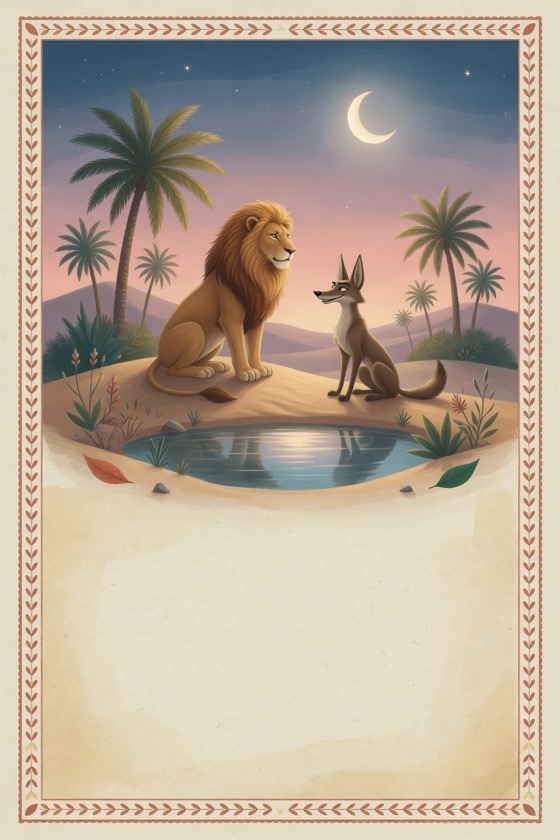
The Arabic shelf is one carefully graded book: Kalila and Dimna, the animal fables that travelled from the Sanskrit Panchatantra through Middle Persian into Ibn al-Muqaffaʿ’s 8th-century Arabic. This retelling follows the lion king, the ox Shanzabeh and the scheming jackal Dimna in plain Modern Standard Arabic, about 1,300 sentences across 38 chapters. It opens in India, where the frame story is set, and every chapter is free to read.
 الأجنحة المتكسرةBroken Wings · Pro
 علاء الدين والمصباح العجيبAladdin and the Wonderful Lamp · Pro
 علي بابا والأربعون لصاAli Baba and the Forty Thieves · Pro
 عنترة وعبلةAntar and Abla · Pro
 فتح الأندلسThe Conquest of Andalusia · Pro
 حكايات إيسوبAesop's Animal Fables · Pro
 شيرلوك هولمز: أربعة ألغازSherlock Holmes: Four Mysteries · Proكليلة ودمنةكليلة ودمنةKalila and Dimna · Free
 معروف الإسكافيMa'ruf the Cobbler · Pro
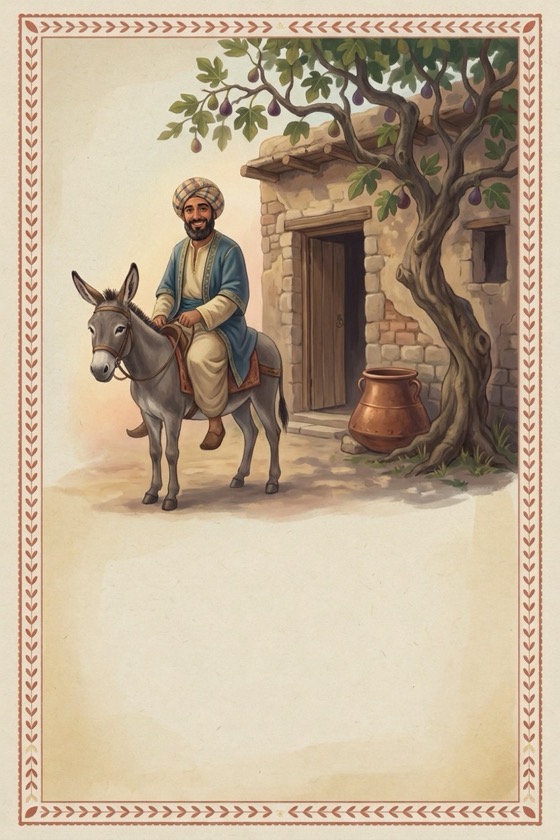 نوادر جحانوادر جحاThe Tales of Juha · Pro
 قمر الزمان وبدورQamar al-Zaman and Budur · Pro
 الصياد والجنيThe Fisherman and the Jinni · Pro
 شجرة الدرShajarat al-Durr · Pro
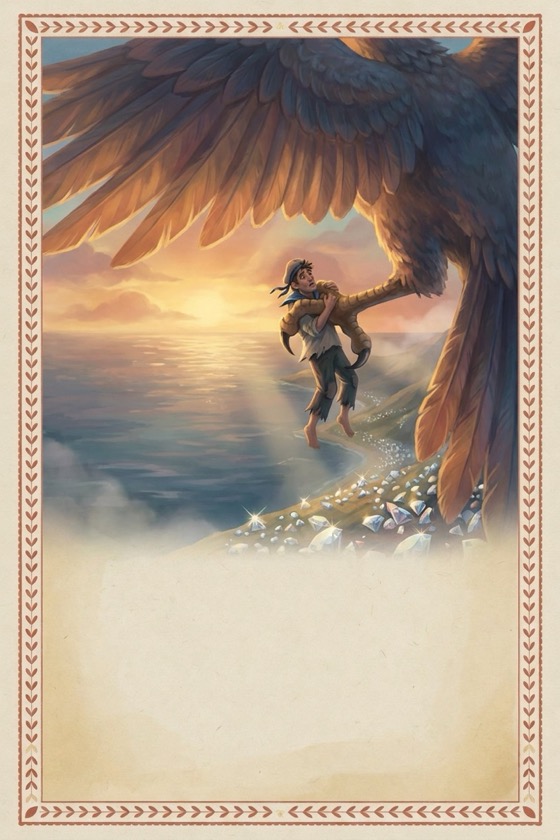 السندباد البحريالسندباد البحريSindbad the Sailor · Pro
How it works
Reading is the method.
No drills, no streak guilt, no cartoon owl. You read real stories, and the app quietly removes everything that used to make that hard.
Tap any word
An instant gloss with romanization for every script — no dictionary detour, no losing your place in the story.
Tap a sentence
See the full translation only when you want it. Understanding stays a choice, not a crutch.
Watch your words add up
Every word you meet is counted. Once you've read it three times without tapping, it's yours — an honest “words known” number that grows chapter by chapter.
How long does it take?
How long does it take to learn Arabic?
The US Foreign Service Institute puts Arabic in Category IV (“super-hard languages”): 88 weeks, about 2,200 class hours, for English-speaking diplomats in full-time classes aiming at professional working proficiency. FSI students also put in hours of self-study each week, so read these as figures for a professional level. At one hour a day on your own, 2,200 hours is about 6.0 years; reading graded books comfortably comes much earlier.
What takes the time in Arabic
The script takes a few weeks. The time goes into reading without short vowels, the root-and-pattern system, broken plurals, verb forms, and the split between Modern Standard Arabic and the spoken dialects.
A reading timeline you can measure
Kalila and Dimna runs A1–B1 over 38 chapters and about 5,729 words (1,068 different word forms) — around 151 words a chapter. At a slow, careful 50 words a minute that is about 3 minutes a day for a chapter a day, and 6 weeks for the whole book.
| Part of the book | Chapters | Avg. sentence (words) | New word forms per chapter | Word forms met so far |
|---|---|---|---|---|
| Beginning | 1–12 | 3.9 | 24 | 289 |
| Middle | 13–25 | 4.2 | 24 | 598 |
| End | 26–38 | 5.0 | 33 | 1,024 |
Counted from the book’s text: sentences get longer as the book goes on.
The 1,000 most frequent Arabic word forms (OpenSubtitles 2018 subtitles (hermitdave/FrequencyWords)) make up 48% of the running text of Kalila and Dimna; the top 3,000 make up 63%. Arabic packs grammar into word endings, so one dictionary word appears in many forms — recognising them is part of the work. See the most common Arabic words.
A good first goal with a daily habit: read a graded book of fables and short unvocalised texts.
FSI figures: US Department of State, Foreign Language Training, checked 2026-10-21. Reading numbers: counted from ReadNative’s books.
Questions
Fair questions, straight answers.
Does the book teach Modern Standard Arabic or a dialect?
Modern Standard Arabic (fuṣḥā) — the Arabic of books, newspapers, signage and news broadcasts, understood from Morocco to Iraq. Everyday conversation happens in regional dialects such as Egyptian, Levantine, Gulf or Maghrebi, which differ from MSA in common words, pronunciation and verb forms. If your goal is reading, MSA is the right foundation; for talking with people you will add a dialect on top.
How long does it take to learn the Arabic alphabet?
28 letters, written right to left and joined together, with most letters taking a different shape at the start, middle or end of a word. Many letters share one skeleton and differ only by dots, so you are really learning around 18 shapes. Two or three weeks of practice is typical before you can read slowly; six letters (ا د ذ ر ز و) never join the letter after them, which is what makes words look broken up.
Where are the vowels?
Short vowels are normally not written in adult Arabic, and this book is printed the normal way, without vowel marks. Tap a word and the transliteration supplies them: هذه is haadhihi, بلاد is bilaad, كبيرة is kabiira. Over time you start predicting them from the root-and-pattern system, where one three-letter root such as ك ب ر (big) produces a family of related words.
How long does it take to learn Arabic?
The US Foreign Service Institute lists Arabic among its Category IV languages, estimating roughly 88 weeks (about 2,200 class hours) of full-time study for an English speaker to reach professional working proficiency. Reading MSA comes before fluent speech; a graded book lets you meet the same core words again and again until they stick.
Which Arabic books does ReadNative have?
14 in the app (1 free, 13 Pro), A1–B2. The free one is كليلة ودمنة (Kalila and Dimna), 38 chapters from absolute-beginner A1 to about B1, free to read in the app and on the web. Glosses and translations are in English. You can also bring your own EPUB books into the reader. Pro books include Broken Wings, Aladdin and the Wonderful Lamp, Ali Baba and the Forty Thieves, Antar and Abla, The Conquest of Andalusia, Aesop's Animal Fables, Sherlock Holmes: Four Mysteries, Ma'ruf the Cobbler and more; free users can read chapter 1 of each.
What are the first lines?
“هذه بلاد الهند. الهند بلاد كبيرة وجميلة. في الهند مدينة كبيرة.” — “This is the land of India. India is a big, beautiful land. In India there is a great city.” A few lines later you meet King Dabschelim and the sage who tells him the stories, the same frame that opens the classical book.
How long does it take to learn Arabic?
The US Foreign Service Institute puts Arabic in Category IV (“super-hard languages”): 88 weeks, about 2,200 class hours, for English-speaking diplomats in full-time classes aiming at professional working proficiency. At one hour a day on your own, 2,200 hours is about 6.0 years; reading graded books comfortably comes much earlier. The script takes a few weeks. The time goes into reading without short vowels, the root-and-pattern system, broken plurals, verb forms, and the split between Modern Standard Arabic and the spoken dialects.
Is it free?
The first book in every language is completely free — no account, no card. Free users can also read chapter 1 of every Pro book. ReadNative Pro unlocks every chapter of every book, plus importing your own EPUB books.
How much does ReadNative Pro cost?
On iPhone and iPad (App Store): $6.99/month or $59.99/year, each with a 7-day free trial, or $59.99 $99.99 once for lifetime access. On the web: $59.99 $99.99 once — Black Friday prices, 40% off until 2 December. On Android (Google Play): $5.99/month or $59.99/year, each with a 7-day free trial, or $59.99 $99.99 once. Prices are the US store prices in US dollars; they vary by country and store. All facts and prices.
Also on ReadNative
One subscription, every language.
Every language gets the same treatment: a graded ladder of real books, tap-to-translate and vocabulary tracking. Narration exists only on 6 Chinese books and 1 Georgian book.
Read your first Arabic book tonight.
The first Arabic book is free — no account, no card. Download the app and tap your first word in the next ten minutes.