Learn Korean · 한국어 🇰🇷
Learn Korean by reading Hong Gildong, one Hangul block at a time
The Joseon tale of a gifted boy who is forbidden to call his own father “father”, retold over 40 graded chapters in polite -요 Korean. Tap any word for its English meaning and a romanized reading, with the particle still attached.

This is the real Korean reader — tap a word, hover a sentence, press play.
The Korean library
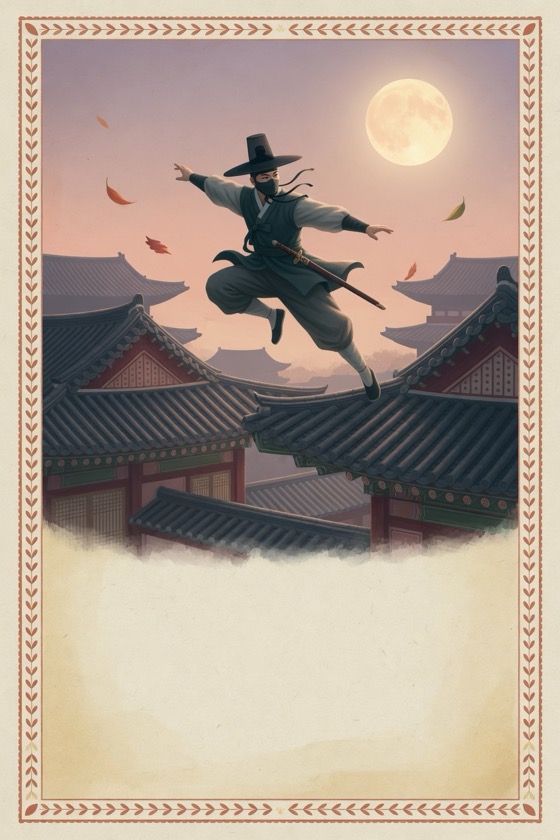
홍길동전
ReadNative’s free Korean book is The Tale of Hong Gildong, the classic traditionally attributed to Heo Gyun. Gildong is the son of Minister Hong and a household servant, so the law will not let him call his father “father”. He survives an assassin, leads the gentleman bandits of Hwalbindang and founds a kingdom of his own. Forty chapters and about 1,350 sentences climb from “there is a big house” to B1 narration, and every chapter can be read free in the browser or in the app.
Free Korean resources
Start right now — no download needed.
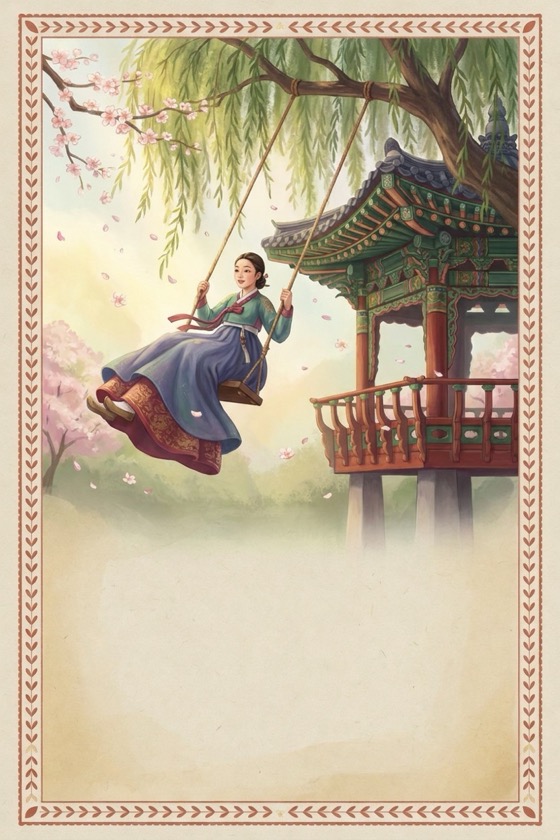 춘향전춘향전The Tale of Chunhyang · Pro
 구운몽The Cloud Dream of the Nine · Pro
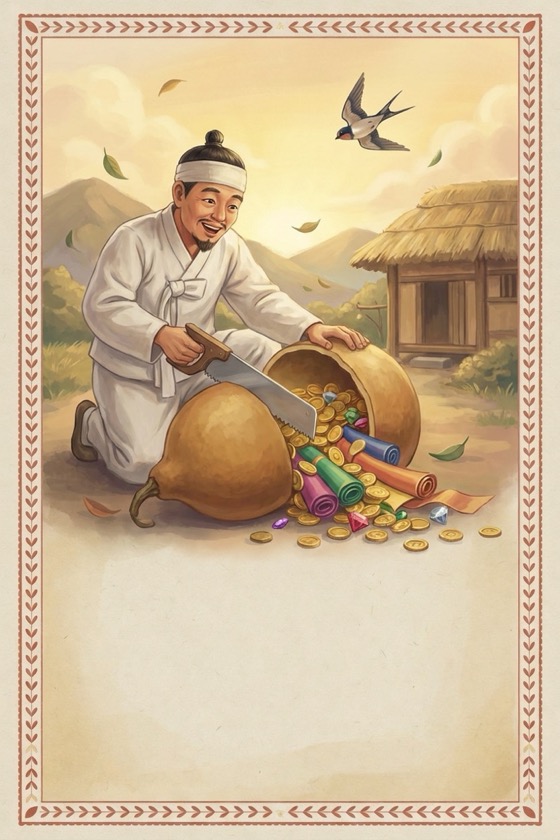 흥부와 놀부흥부와 놀부Heungbu and Nolbu · Pro홍길동전홍길동전The Tale of Hong Gildong · Free
 호랑이와 곶감The Tiger and the Dried Persimmon · Pro
 운수 좋은 날과 두 이야기A Lucky Day and Two Other Stories · Pro
 임금님의 새 옷The Emperor's New Clothes · Pro
 전우치전The Tale of Jeon Uchi · Pro
 콩쥐팥쥐Kongjwi and Patjwi · Pro
 온달과 평강공주Ondal and Princess Pyeonggang · Pro
 피터 토끼 이야기The Tale of Peter Rabbit · Pro
 심청전The Tale of Sim Cheong · Pro
 토끼와 자라The Rabbit and the Turtle · Pro
How it works
Reading is the method.
No drills, no streak guilt, no cartoon owl. You read real stories, and the app quietly removes everything that used to make that hard.
Tap any word
An instant gloss with romanization for every script — no dictionary detour, no losing your place in the story.
Tap a sentence
See the full translation only when you want it. Understanding stays a choice, not a crutch.
Watch your words add up
Every word you meet is counted. Once you've read it three times without tapping, it's yours — an honest “words known” number that grows chapter by chapter.
How long does it take?
How long does it take to learn Korean?
The US Foreign Service Institute puts Korean in Category IV (“super-hard languages”): 88 weeks, about 2,200 class hours, for English-speaking diplomats in full-time classes aiming at professional working proficiency. FSI students also put in hours of self-study each week, so read these as figures for a professional level. At one hour a day on your own, 2,200 hours is about 6.0 years; reading graded books comfortably comes much earlier.
What takes the time in Korean
Hangul is quick. The time goes into verb endings and speech levels, particles that mark the role of each word, subject-object-verb order, and vocabulary that has little in common with English.
A reading timeline you can measure
The Tale of Hong Gildong runs A1–B1 over 40 chapters and about 4,968 words (1,303 different word forms) — around 124 words a chapter. At a slow, careful 50 words a minute that is about 2 minutes a day for a chapter a day, and 6 weeks for the whole book.
| Part of the book | Chapters | Avg. sentence (words) | New word forms per chapter | Word forms met so far |
|---|---|---|---|---|
| Beginning | 1–13 | 3.3 | 32 | 421 |
| Middle | 14–26 | 3.8 | 30 | 811 |
| End | 27–40 | 4.1 | 30 | 1,234 |
Counted from the book’s text: sentences get longer and new words thin out as the book goes on.
The 1,000 most frequent Korean word forms (OpenSubtitles 2018 subtitles (hermitdave/FrequencyWords)) make up 35% of the running text of The Tale of Hong Gildong; the top 3,000 make up 46%. Korean packs grammar into word endings, so one dictionary word appears in many forms — recognising them is part of the work. See the most common Korean words.
A good first goal with a daily habit: read a graded classic tale and simple webtoon dialogue.
FSI figures: US Department of State, Foreign Language Training, checked 2026-10-21. Reading numbers: counted from ReadNative’s books.
Questions
Fair questions, straight answers.
How long does it take to learn Hangul?
Hangul was designed on purpose — King Sejong’s scholars published it in 1446 — and it shows: 14 basic consonants and 10 basic vowels, stacked into square syllable blocks (한 = ㅎ + ㅏ + ㄴ). Many learners can sound out words after a weekend. What takes longer are the sound changes between syllables (한국어 is said hangugeo) and the plain/aspirated/tense consonant trio ㄱ ㅋ ㄲ. Tapping a word in the reader shows its romanized reading, so you can check yourself while you read.
How hard is Korean for English speakers?
Hard, honestly. The US Foreign Service Institute puts Korean in its Category IV, with an estimated 88 weeks (about 2,200 class hours) of full-time study for English speakers to reach professional working proficiency. The alphabet is the easy part; the time goes into verb-final word order, particles, speech levels and vocabulary that shares almost nothing with English. Reading graded text early is how that vocabulary stops being a wall.
What kind of Korean does the book use?
Polite everyday style — the -아요/-어요 endings you see in 있어요 (there is), 살아요 (lives) and 좋아해요 (likes). It is the register most courses teach first. Particles stay glued to their nouns, exactly as Koreans write them: tap 홍판서가 and you see “Minister Hong” and the reading Hong Panseo-ga, with the subject marker -가 visible rather than hidden.
Which Korean books are in ReadNative?
13 in the app (1 free, 12 Pro), A1–B2. The free one is 홍길동전 (The Tale of Hong Gildong), a graded retelling in 40 chapters that starts at absolute-beginner A1 and ends around B1. It is free, with no account required, and you can also import your own EPUB books once you outgrow it. Pro books include The Tale of Chunhyang, The Cloud Dream of the Nine, Heungbu and Nolbu, The Tiger and the Dried Persimmon, A Lucky Day and Two Other Stories, The Emperor's New Clothes, The Tale of Jeon Uchi, Kongjwi and Patjwi and more; free users can read chapter 1 of each.
How does the first chapter start?
“옛날 조선의 한양에 큰 집이 있어요. 이 큰 집에 홍판서가 살아요.” — “Long ago, in Hanyang, the capital of Joseon, there is a big house. In this big house lives Minister Hong.” Hanyang is the old name of Seoul. Within a few lines you meet Chunseom, the servant who will become Gildong’s mother.
Who was Hong Gildong?
A fictional hero, often compared to Robin Hood: the son of a nobleman and a servant who turns his exclusion into a band of righteous outlaws. The tale is traditionally credited to the scholar-official Heo Gyun (died 1618) and is often cited as one of the first Korean novels written in Hangul, though scholars debate the attribution. The name is so familiar that Koreans use “Hong Gildong” as the sample name on forms.
How long does it take to learn Korean?
The US Foreign Service Institute puts Korean in Category IV (“super-hard languages”): 88 weeks, about 2,200 class hours, for English-speaking diplomats in full-time classes aiming at professional working proficiency. At one hour a day on your own, 2,200 hours is about 6.0 years; reading graded books comfortably comes much earlier. Hangul is quick. The time goes into verb endings and speech levels, particles that mark the role of each word, subject-object-verb order, and vocabulary that has little in common with English.
Is it free?
The first book in every language is completely free — no account, no card. Free users can also read chapter 1 of every Pro book. ReadNative Pro unlocks every chapter of every book, plus importing your own EPUB books.
How much does ReadNative Pro cost?
On iPhone and iPad (App Store): $6.99/month or $59.99/year, each with a 7-day free trial, or $59.99 $99.99 once for lifetime access. On the web: $59.99 $99.99 once — Black Friday prices, 40% off until 2 December. On Android (Google Play): $5.99/month or $59.99/year, each with a 7-day free trial, or $59.99 $99.99 once. Prices are the US store prices in US dollars; they vary by country and store. All facts and prices.
Also on ReadNative
One subscription, every language.
Every language gets the same treatment: a graded ladder of real books, tap-to-translate and vocabulary tracking. Narration exists only on 6 Chinese books and 1 Georgian book.
Read your first Korean book tonight.
The first Korean book is free — no account, no card. Download the app and tap your first word in the next ten minutes.