Learn Persian · فارسی 🇮🇷
Learn Persian (Farsi) by reading Rostam and Sohrab
Ferdowsi’s most heartbreaking story — a hero who never sees his son’s face until they meet on the battlefield — retold in simple modern Persian over 38 graded chapters. Read right to left; tap any word for English and the vowels the script leaves out.

This is the real Persian reader — tap a word, hover a sentence, press play.
The Persian library
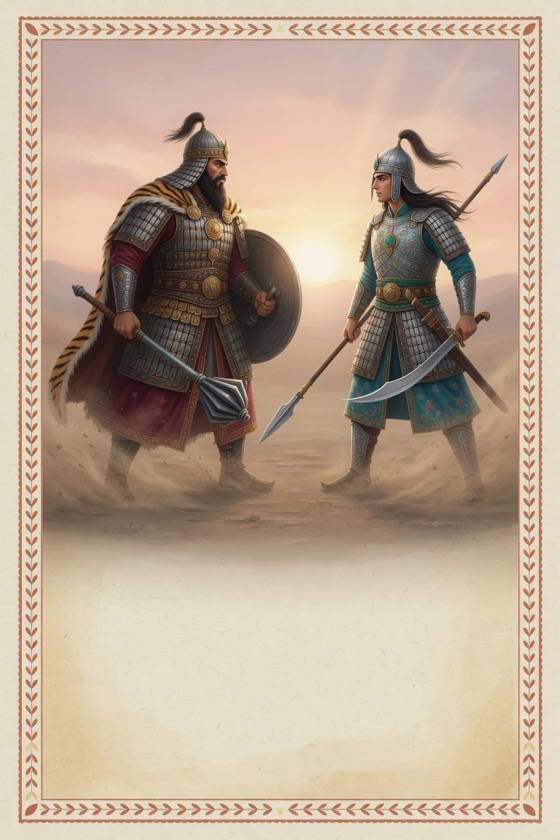
رستم و سهراب
The Persian shelf is one graded retelling of the Shahnameh’s best-known tragedy. Rostam, Iran’s greatest hero, spends a single night in Samangan with Tahmineh; their son Sohrab grows up never having met him, and the two finally face each other as enemies. About 1,260 sentences over 38 chapters move from “این ایران است” (This is Iran) to B1 narrative, and every chapter is free to read.
 بندانگشتیThumbelina · Pro
 گنبد سرخ: شاهدخت و چهار معماThe Red Pavilion: The Princess and Four Riddles · Pro
 حکایتهای گلستانStories from the Golestan · Pro
 کاوه و ضحاکKaveh and Zahhak · Pro
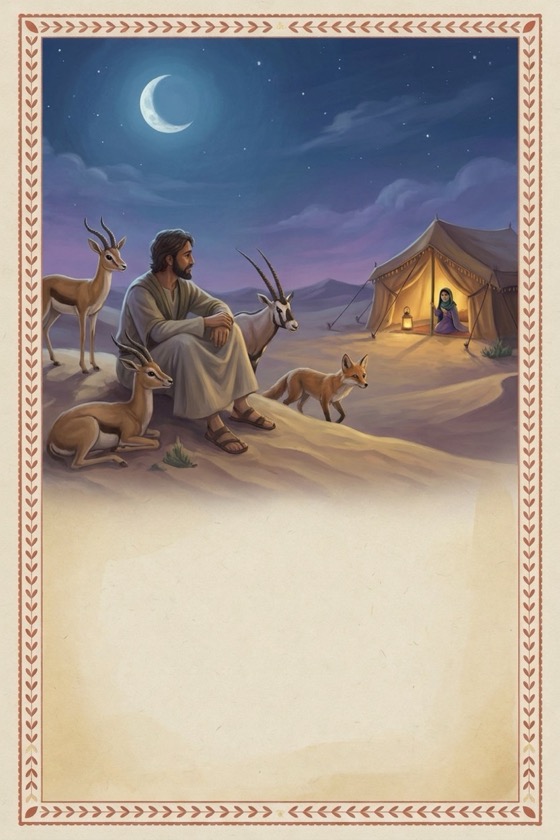 لیلی و مجنونلیلی و مجنونLeyli and Majnun · Pro
 طوطی و بازرگان و سه حکایت دیگرThe Parrot and the Merchant and Three Other Tales · Pro
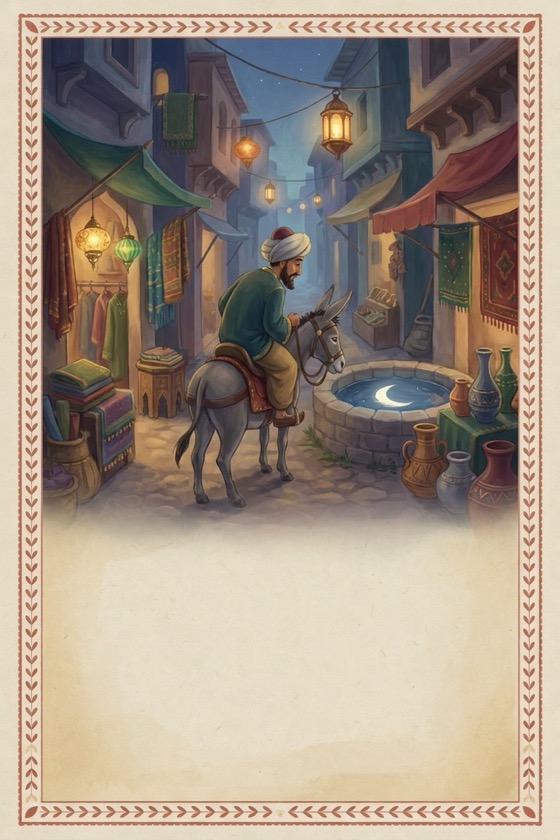 ملا نصرالدینملا نصرالدینMulla Nasreddin · Proرستم و سهرابرستم و سهرابRostam and Sohrab · Free
 سیاحتنامهٔ ابراهیمبیگThe Travel Diary of Ebrahim Beg · Pro
 سرود کریسمسA Christmas Carol · Pro
 زال و رودابهZal and Rudabeh · Pro
How it works
Reading is the method.
No drills, no streak guilt, no cartoon owl. You read real stories, and the app quietly removes everything that used to make that hard.
Tap any word
An instant gloss with romanization for every script — no dictionary detour, no losing your place in the story.
Tap a sentence
See the full translation only when you want it. Understanding stays a choice, not a crutch.
Watch your words add up
Every word you meet is counted. Once you've read it three times without tapping, it's yours — an honest “words known” number that grows chapter by chapter.
How long does it take?
How long does it take to learn Persian?
The US Foreign Service Institute puts Persian (listed as Farsi) in Category III (“hard languages”): about 44 weeks, about 1,012 class hours, for English-speaking diplomats in full-time classes aiming at professional working proficiency. FSI students also put in hours of self-study each week, so read these as figures for a professional level. At one hour a day on your own, 1,012 hours is about 2.8 years; reading graded books comfortably comes much earlier.
What takes the time in Persian
Grammar is among the easier parts. The time goes into the script, reading without short vowels, the ezafe construction that isn't written, compound verbs, and the gap between written and colloquial Persian.
A reading timeline you can measure
Rostam and Sohrab runs A1–B1 over 38 chapters and about 5,831 words (673 different word forms) — around 153 words a chapter. At a slow, careful 50 words a minute that is about 3 minutes a day for a chapter a day, and 6 weeks for the whole book.
| Part of the book | Chapters | Avg. sentence (words) | New word forms per chapter | Word forms met so far |
|---|---|---|---|---|
| Beginning | 1–12 | 4.0 | 18 | 221 |
| Middle | 13–25 | 5.0 | 15 | 416 |
| End | 26–38 | 4.8 | 16 | 629 |
Counted from the book’s text: sentences get longer and new words thin out as the book goes on.
The 1,000 most frequent Persian word forms (OpenSubtitles 2018 subtitles (hermitdave/FrequencyWords)) make up 56% of the running text of Rostam and Sohrab; the top 3,000 make up 68%. Frequent words carry most of the text, so early vocabulary pays off fast. See the most common Persian words.
A good first goal with a daily habit: read a graded Shahnameh retelling and short unvocalised texts.
FSI figures: US Department of State, Foreign Language Training, checked 2026-10-21. Reading numbers: counted from ReadNative’s books.
Questions
Fair questions, straight answers.
Is Persian the same language as Farsi?
Yes. Fārsi (فارسی) is what the language calls itself; Persian is its traditional English name, and both refer to the same language. It has three standard varieties: Iranian Persian, Dari in Afghanistan and Tajik in Tajikistan, which is written in Cyrillic. This book is written in standard modern Persian, and its romanization follows Iranian pronunciation.
How hard is it to read right to left?
Less than it looks. Persian uses 32 letters: the 28 of Arabic plus پ (p), چ (ch), ژ (zh) and گ (g). Letters join and change shape by position, and there are no capitals. Your eyes adjust to the direction within days; the real work is that short vowels are not written, so سرزمین could be several things until you know it is sarzamin (land). The reader’s romanization fills those gaps on every tap.
What is the -e that appears in the romanization?
That is the ezafe, the linking vowel that joins a noun to the word describing it or owning it: نام او is naam-e u, “his name”. Persian writing almost never shows it, which is one reason beginners stumble when reading aloud. The romanization in the book marks it — pahlavaan-e, sarzamin-e — so you learn to hear it before you learn to predict it.
How long does it take to learn Persian?
The US Foreign Service Institute rates Persian (Farsi) a Category III language: around 44 weeks, or roughly 1,100 class hours, of full-time study for English speakers to reach professional working proficiency. The grammar is kind — no grammatical gender, no articles, regular verb endings — while the script and a large stock of Arabic loanwords take the most time.
Which Persian books does ReadNative have, and how do they start?
11 in the app (1 free, 10 Pro), A1–B2. The free one is رستم و سهراب (Rostam and Sohrab), 38 chapters from absolute-beginner A1 to about B1, free in the app and on the web. It opens: “این ایران است. ایران سرزمین بزرگی است. ایران یک پهلوان بزرگ دارد. نام او رستم است.” — “This is Iran. Iran is a great land. Iran has a great hero. His name is Rostam.” Pro books include Thumbelina, The Red Pavilion: The Princess and Four Riddles, Stories from the Golestan, Kaveh and Zahhak, Leyli and Majnun, The Parrot and the Merchant and Three Other Tales, Mulla Nasreddin, The Travel Diary of Ebrahim Beg and more; free users can read chapter 1 of each.
Will I be able to read the real Shahnameh afterwards?
Not straight away. Ferdowsi completed the Shahnameh around 1010 CE in some 50,000 couplets of epic verse, and many native speakers read it with notes. What the graded book gives you is the story, the names and the core vocabulary, so that when you open the original the words Rostam, Rakhsh and Sohrab are already old friends.
How long does it take to learn Persian?
The US Foreign Service Institute puts Persian (listed as Farsi) in Category III (“hard languages”): about 44 weeks, about 1,012 class hours, for English-speaking diplomats in full-time classes aiming at professional working proficiency. At one hour a day on your own, 1,012 hours is about 2.8 years; reading graded books comfortably comes much earlier. Grammar is among the easier parts. The time goes into the script, reading without short vowels, the ezafe construction that isn't written, compound verbs, and the gap between written and colloquial Persian.
Is it free?
The first book in every language is completely free — no account, no card. Free users can also read chapter 1 of every Pro book. ReadNative Pro unlocks every chapter of every book, plus importing your own EPUB books.
How much does ReadNative Pro cost?
On iPhone and iPad (App Store): $6.99/month or $59.99/year, each with a 7-day free trial, or $59.99 $99.99 once for lifetime access. On the web: $59.99 $99.99 once — Black Friday prices, 40% off until 2 December. On Android (Google Play): $5.99/month or $59.99/year, each with a 7-day free trial, or $59.99 $99.99 once. Prices are the US store prices in US dollars; they vary by country and store. All facts and prices.
Also on ReadNative
One subscription, every language.
Every language gets the same treatment: a graded ladder of real books, tap-to-translate and vocabulary tracking. Narration exists only on 6 Chinese books and 1 Georgian book.
Read your first Persian book tonight.
The first Persian book is free — no account, no card. Download the app and tap your first word in the next ten minutes.