🇪🇸 Spanish
Spanish graded readers: what to read at each level
Spanish has more graded readers than almost any other language: publisher series like ELI Readers and Cideb, collections such as Olly Richards' Short Stories in Spanish, and apps like LingQ and Readlang that let you read anything with a dictionary. The problem is choosing. The single most useful rule is to read a lot of text that is easy for you, rather than a little that is hard.
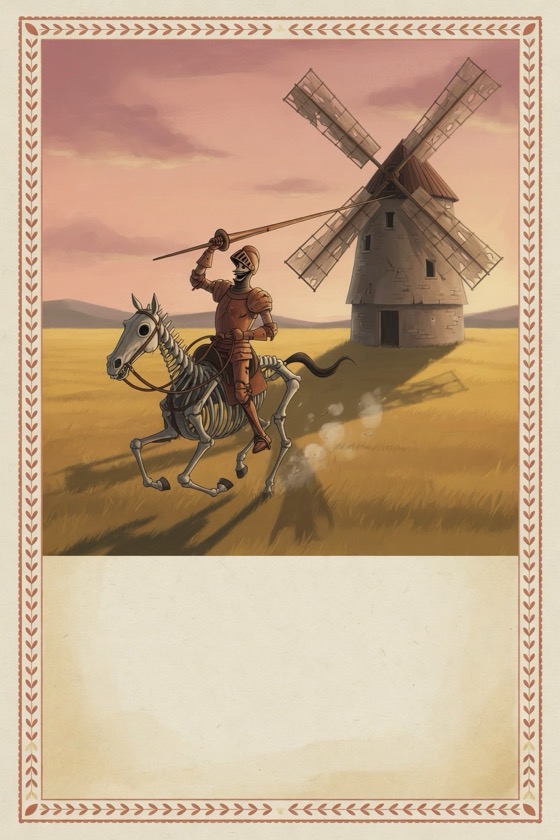
ReadNative's Spanish book is Don Quixote, retold as one graded story that starts at A1 and grows to B1 over 48 chapters — so one book covers the first three levels without switching series. It is free, and you can read the first chapters free in your browser, tapping any word for its English meaning or any sentence for a translation.
Spanish graded readers on ReadNative
What to read at each level
A1
Very short sentences in the present tense, with the most common few hundred words repeated often. The opening chapters of the Don Quixote retelling — the village, the books, the armour, Rocinante — are written for exactly this stage. Aim to understand the story, not every word.
A2
Stories that bring in the past tenses (preterite and imperfect) and more dialogue. Keep reading the middle chapters of Don Quixote, where Sancho joins and the adventures start, or any A2 reader from a publisher series. Volume matters more than variety.
B1
Longer narratives with subordinate clauses and some subjunctive. The final chapters of Don Quixote reach B1. This is also the level where learner-oriented news and longer series from Spanish publishers become comfortable.
B2
Graded readers become less necessary. Try contemporary novels written in plain style, young-adult fiction, or short stories by writers like Julio Cortázar, using tap-to-translate on your own EPUBs if you want support.
Not sure where you are? Take the Spanish vocabulary test or check a text with the difficulty checker.
Questions
What is a graded reader?
A book written or retold with controlled vocabulary and grammar for a specific level, so a learner can read a whole story in Spanish with little dictionary use. The aim is lots of comfortable reading, not decoding.
Are Spanish graded readers better than native books?
For beginners, yes: they let you read whole stories at your level. From B2, native books become the better choice, and graded readers are the bridge to get there.
Can I import my own Spanish books?
Yes. ReadNative can import EPUB files and translate them chapter by chapter, so you can keep reading with tap-to-translate once you outgrow graded books.