
🇮🇷 Persian
Persian graded readers: what to read at each level
Persian graded readers for English speakers are scarce. Most easy material is for children or heritage learners, and much of it uses full vowel marks that disappear in real texts. Learners need a bridge from vowelled textbook Persian to the script as Iranians read it.
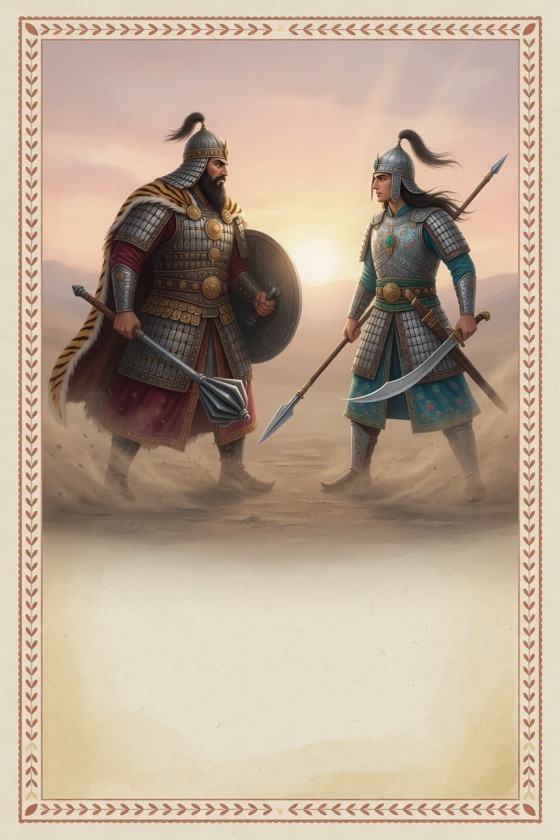
ReadNative's Persian book is Rostam and Sohrab, from Ferdowsi's Shahnameh, retold from absolute beginner to B1 over 38 chapters, with transliteration on tap. It is free, and you can read the first chapters free in your browser, tapping any word for its English meaning or any sentence for a translation.
Persian graded readers on ReadNative
What to read at each level
A1
Rostam, his horse Rakhsh and the city of Samangan, in short present- and past-tense sentences.
A2
Tahmineh, the birth of Sohrab and his growing up bring more verbs, the ezafe and compound verbs.
B1
The tragic final chapters reach B1 with longer, more literary sentences.
B2
Contemporary Persian fiction, news and the Shahnameh in modern prose versions. Iran's rich literature becomes accessible from here.
Not sure where you are? Take the Persian vocabulary test or check a text with the difficulty checker.
Questions
Is Persian easier than Arabic?
Its grammar is simpler — no gender, regular verbs — but it shares the script and many Arabic loanwords.
What is a graded reader?
A book written or retold with controlled vocabulary and grammar for a specific level, so a learner can read a whole story in Persian with little dictionary use. The aim is lots of comfortable reading, not decoding.
How do I know if a book is the right level?
If you understand the story and need to look up only a few words per page, it is right. If every sentence needs help, drop down a level; if you never tap anything, move up. In Persian the step from graded books to native texts is steep, so do not rush it.