🇯🇵 Japanese
Japanese graded readers by JLPT level
Japanese has a good set of graded readers: the NPO Tadoku series (published as Japanese Graded Readers), the serialised stories of Satori Reader, and apps like LingQ. The biggest early obstacle is kanji, so the right book is one where you recognise most characters, not just most words.
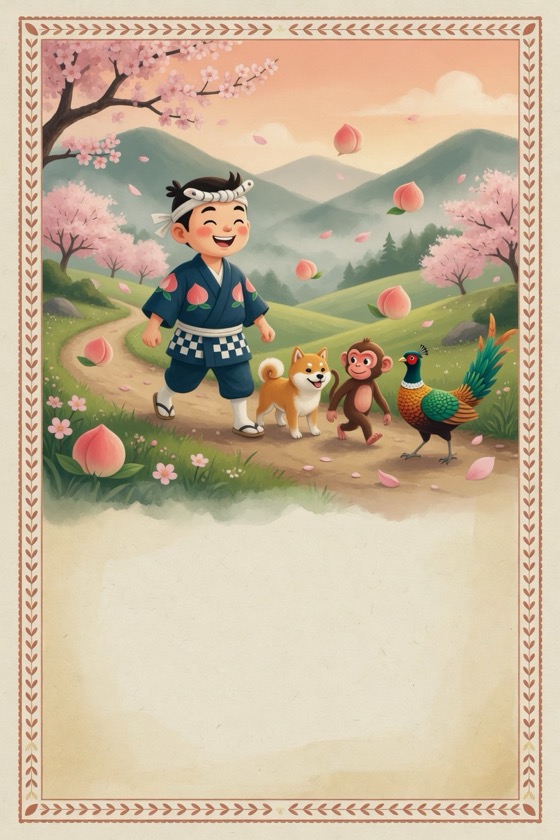
ReadNative's Japanese book is Momotaro, the Peach Boy, retold as one graded story from absolute beginner (around N5) to around B1 (roughly N3) over 32 chapters. Tap any word to see its English meaning and romaji reading. It is free, and you can read the first chapters free in your browser, tapping any word for its English meaning or any sentence for a translation.
Japanese graded readers on ReadNative
What to read at each level
N5 (A1)
Short sentences in polite present and past forms, mostly kana with a few common kanji. The opening chapters of Momotaro — the river, the mountains, the giant peach — are written for this stage.
N4 (A2)
Te-form chains, simple plain-form speech and more kanji. The middle of Momotaro, with the animal companions and the journey, fits here; Tadoku readers at levels 1–2 are a good supplement.
N3 (B1)
Longer narrative sentences, relative clauses, casual dialogue. The final chapters of Momotaro reach about this level. Satori Reader and higher Tadoku levels follow on naturally.
N2 (B2)
Native material becomes realistic: light novels, children's literature, manga with furigana, and your own EPUBs imported into ReadNative.
Not sure where you are? Take the Japanese vocabulary test or check a text with the difficulty checker.
Questions
How do JLPT levels compare to CEFR?
Only roughly. N5 is around A1, N4 around A2, N3 around B1 and N2 around B2, but JLPT does not test speaking or writing, so the match is approximate.
Do I need to know kanji to read graded readers?
You need kana. Graded readers introduce kanji gradually, and in ReadNative tapping any word shows its reading.
How do I know if a book is the right level?
If you understand the story and need to look up only a few words per page, it is right. If every sentence needs help, drop down a level; if you never tap anything, move up. In Japanese the step from graded books to native texts is steep, so do not rush it.